
In the modern digital era, B2B social media marketing has become a crucial component for B2B businesses. While Digital Marketing encompasses various strategies, B2B social media focus is now an integral part of the overall business growth landscape Although social media marketing was once considered to be the sole domain of B2C businesses, it has now become an integral part of B2B marketing as well. Today, a brand’s social presence is often its first point of contact with potential corporate clients. It is no longer just about being present; it is about building a professional identity that resonates with other businesses.
Currently, over 4.9 billion people globally are using social media. This massive number includes a vast number of B2B target audiences such as business decision-makers, company directors, managers, and procurement officers. According to a study, 75% of B2B buyers use social media to research a product or service before buying it. This indicates that social media is an important part of the B2B buying process. In this blog post, we will discuss in detail the importance, strategies, best platforms, and metrics for success of B2B social media marketing.
What is B2B social media marketing?
B2B Social Media Marketing: This refers to the marketing activities that are carried out by a business targeting other businesses using social media platforms. This includes platforms such as LinkedIn, Twitter (X), Facebook, Instagram, and YouTube. Unlike B2C marketing, B2B marketing involves the creation of more long-term relationships
Why is social media important in B2B marketing?
Currently, over 4.9 billion people globally are using social media.This includes a vast number of B2B target audiences such as business decision-makers, company directors, managers, and procurement officers. According to a study, 75% of B2B buyers use social media to research a product or service before buying it. This indicates that social media is an important part of the B2B buying process.
Best B2B Social Media Marketing Platforms

Choosing the right platform is essential for reaching the right professional audience:
Facebook & Instagram: While often seen as B2C, they are powerful for B2B brand awareness and retargeting through visual storytelling
LinkedIn: Often called the “king of B2B marketing,” it boasts over 900 million engaged professionals. You can leverage company pages, in-depth articles, and LinkedIn Live to build authority.
YouTube: This is a necessity for B2B teams wanting to explore products in-depth. Use it for product demos, tutorials, and webinar recordings.
Twitter (X): This platform is highly effective for tracking industry trends, news, and engaging in real-time influencer marketing.
Effective B2B Social Media Marketing Strategies
To see real business growth, you must move beyond simple posting and adopt these high-level strategies:
-
Thought Leadership: Establish your brand as an industry voice by publishing expert interviews, industry insight reports, and detailed case studies. This builds immense trust with potential clients.
-
Employee Advocacy: Encourage your team to share company content. People trust other people more than they trust brands, and this significantly increases your organic reach.
-
Social Listening: Use tools like Hootsuite, Sprout Social, or Brandwatch to monitor conversations about your brand and competitors. This helps you understand customer pain points and market shifts.
-
Targeted Paid Advertising: Since organic reach is declining, paid ads are vital. Use LinkedIn Ads to target by job title, company size, and industry. You can also use Custom and Lookalike Audiences on Facebook for precise lead generation.
Content Strategy: Attention-grabbing content
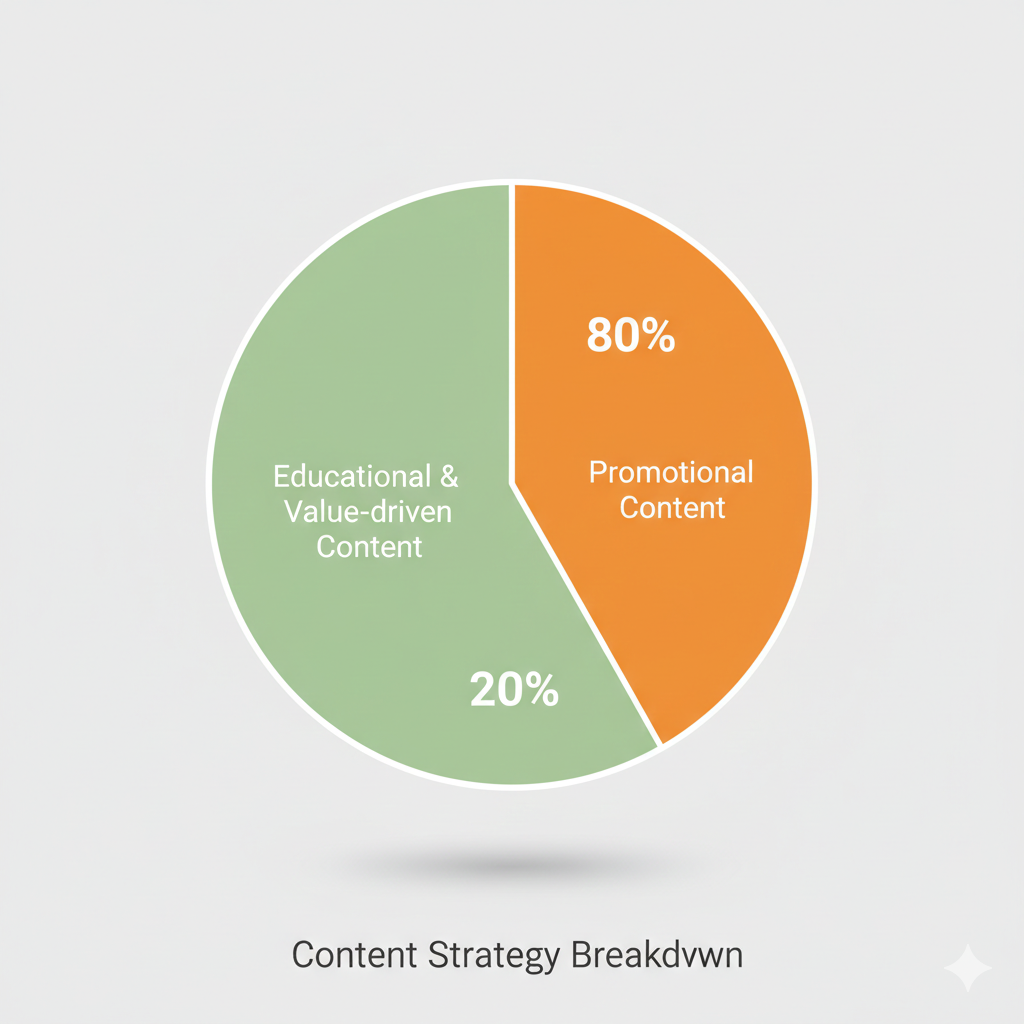
When it comes to B2B social media content, there should be a value-driven approach. Share educational content, infographics, video tutorials, podcasts, webinars, whitepapers, and success stories. Use the 80-20 rule: 80% informative, educational content and 20% promotional content. This will help you build trust with your audience.
Consistency is the key to a successful content strategy. Make a content calendar and post content at fixed intervals. Learn the best posting times, content types, character limits, and hashtag tactics for each social media platform and tailor your content accordingly.
Measuring Success: KPIs and Metrics

It is the need of the hour to monitor the right metrics in order to calculate the ROI of B2B social media marketing. The most important metrics are Engagement Rate (likes, comments, shares), Reach and Impressions, Click-Through Rate (CTR), Lead Generation, Website Traffic from Social Media, Conversion Rate, and Cost Per Lead (CPL).
Mistakes to avoid when using social media for B2B
First, do not over-promote. Always trying to sell products will turn off the audience. Second, engage with the audience. Not responding to comments and messages is not good for your brand image. Third, do not copy and paste the same information on all platforms. Each platform needs a different content approach.
The 80/20 Content Strategy
For successful B2B Social Media Marketing, focus on a value-driven approach. Share educational infographics, podcasts, whitepapers, and success stories. Follow the 80/20 Rule: 80% of your content should be educational and informative, while only 20% should be promotional. Consistency is key; use a content calendar to post at optimal times for each platform
The Future Trends in B2B Social Media Marketing
As we move further into the digital age, the landscape of B2B social media marketing continues to evolve rapidly. Staying ahead of these trends is essential for maintaining a competitive edge. Here are some emerging trends that every B2B marketer should watch:
- AI-Powered Personalization: Artificial Intelligence is revolutionizing how we target businesses. From AI-driven chatbots for instant lead qualification to personalized content recommendations, AI helps in delivering the right message to the right decision-maker at the right time.
-
Video Content Dominance: While text-based posts are still relevant, short-form and long-form videos are seeing higher engagement. Behind-the-scenes office culture videos, quick product explainers, and live Q&A sessions are becoming staples in a successful B2B strategy.
-
Interactive Content: Webinars are already popular, but interactive polls, quizzes, and ROI calculators are becoming more common. This type of content keeps the audience engaged longer and provides valuable data about your potential clients’ needs.
-
Niche Communities: Beyond the major platforms, B2B brands are increasingly building or participating in niche communities like Slack channels, Discord servers, or industry-specific forums. These smaller groups allow for much deeper relationships and highly targeted discussions.
-
Human-Centric Branding: Even though it is Business-to-Business, at the end of the day, you are selling to people. B2B brands are now adopting a more “human” tone, using storytelling and humor where appropriate to break the ice and build authentic connections
Conclusion
B2B social media marketing is an investment of the long-term kind. Even if you do not see immediate success, if you press ahead with consistency, value-driven content, and a data-driven approach, you will be surprised at the success you can achieve. A strong LinkedIn presence, educational content, and audience engagement are the three secrets of success in this field.
In the coming years, the gap between B2B and B2C marketing styles will continue to shrink. Businesses that humanize their brand and provide genuine value through social platforms will emerge as market leaders. Start building your strategy today, focus on building relationships rather than just closing sales, and watch your business reach new heights.